APST - 1: Know Students & How They Learn
Year 8 Stage 4 Music: Ensemble Rehearsal – “Counting Starsl”
NESA Music 7–10 Syllabus (2024) Outcomes: MU4-PER-01
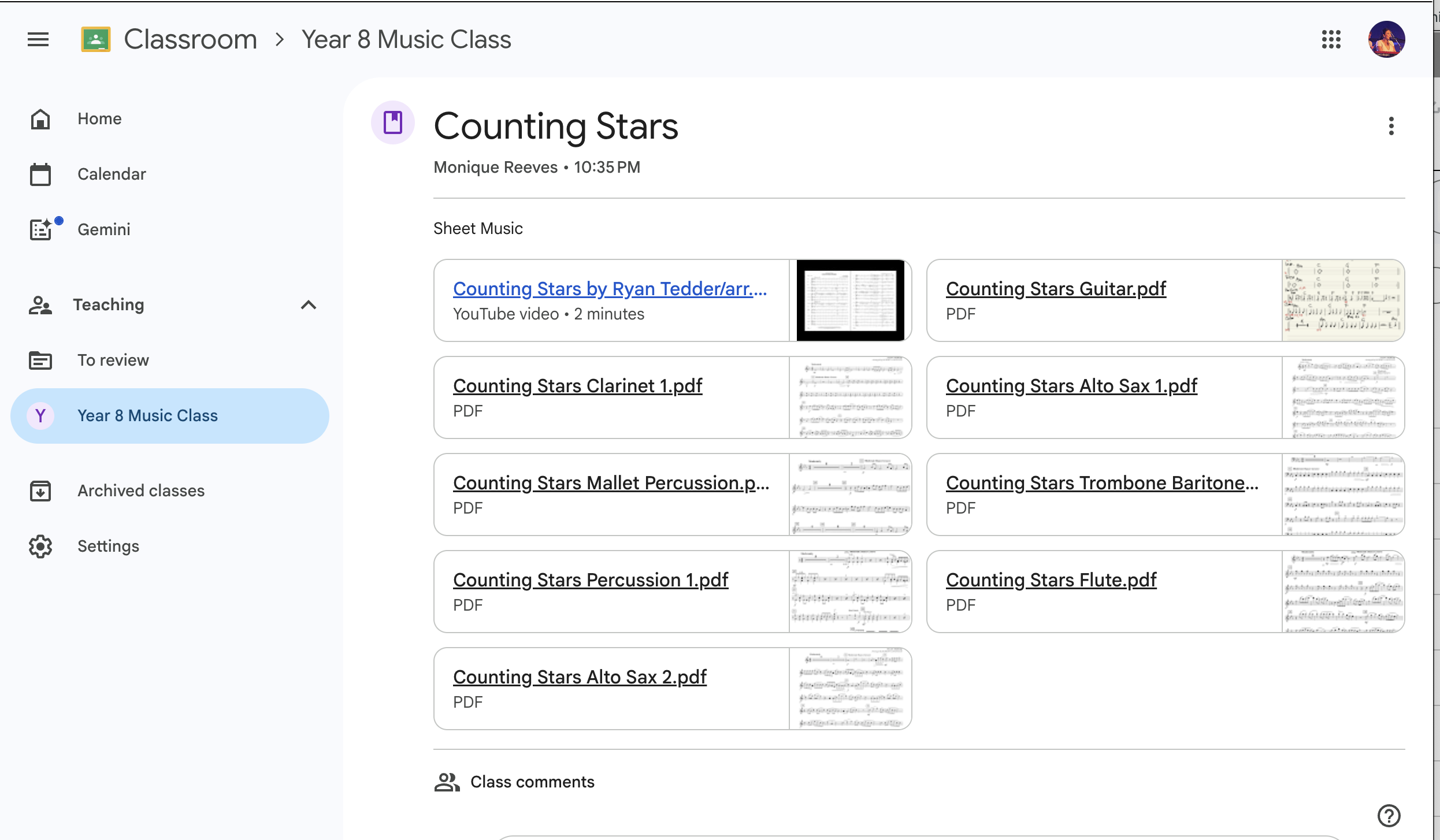
Google Classroom
Access content anywhere, anytime.
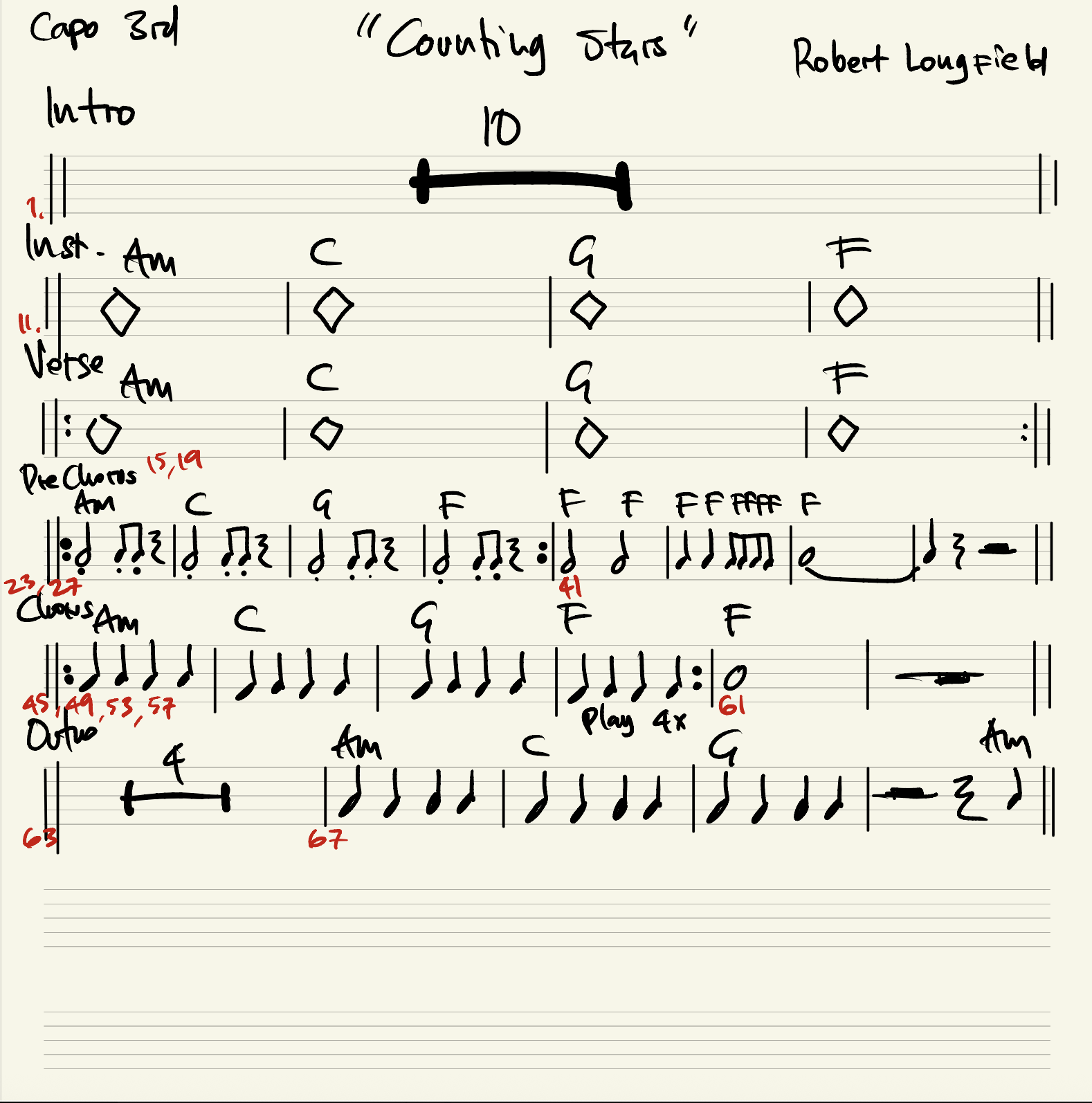
Guitar/Harmony Arrangement
Differentiated access to learning is supported by providing both sheet music and chord charts. A simplified, self-arranged harmony version was created for students with developing instrumental skills who perform on piano, guitar, or ukulele.
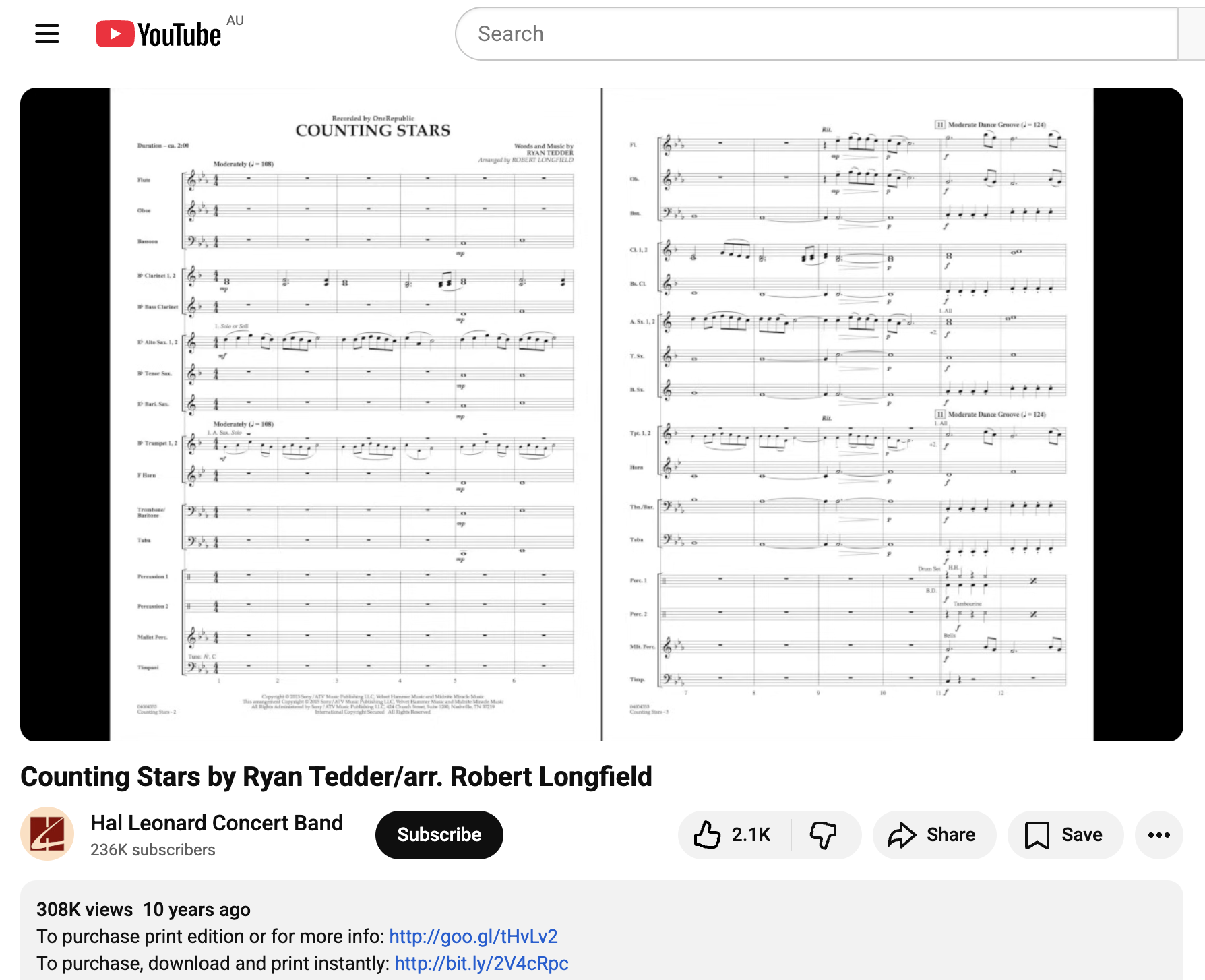
Backing Track Links
Adjustable backing track tempos support scaffolded learning by allowing students to progressively develop confidence, timing and ensemble accuracy at an appropriate pace.
Commentary
This artefact demonstrates the use of collaborative ensemble rehearsal strategies in a Stage 4, Year 8 General Music class, using an arrangement of “Counting Stars” by OneRepublic. The resource includes a Google Classroom rehearsal page, audio rehearsal materials and a guitar/harmony arrangement.
Students develop performance skills and engage with the elements of music: duration, texture, and pitch, whilst building ensemble awareness and rehearsal etiquette. The use of differentiated instrumental parts enables students with varied musical backgrounds and varying levels of performance confidence to participate in the ensemble context.
ICT integration supports multimodal learning and enables students to access rehearsal materials both within and beyond the classroom. The use of audio recordings (backing tracks) and differentiated chord charts/sheet music supports students through auditory, visual, and kinaesthetic modes of learning, supporting students to learn in multiple ways. Google Classroom provides students with centralised access to audio tracks, rehearsal resources and arrangement materials, supporting independent practice and revision. Digital rehearsal recordings and backing tracks also assist students in developing rhythmic accuracy, listening skills and ensemble cohesion. These approaches support engagement through flexible access to learning materials and opportunities for self-paced revision. The integration of ICT within this rehearsal resource also supports scaffolded ensemble learning by enabling students to access rehearsal materials, backing tracks and arrangement resources outside classroom time. These digital rehearsal supports provide temporary structured assistance that enables students to progressively build confidence, rhythmic accuracy and ensemble awareness before moving towards increasingly independent ensemble performance.
This artefact demonstrates APST 1 - that helping students learn requires differentiated support in accessing practical music learning experiences. Structured rehearsal scaffolds, including teacher modelling, sectional rehearsal and differentiated instrumental parts, support students in progressively developing confidence and independence within ensemble performance contexts. Collaborative rehearsal structures also encourage peer-supported learning within the ensemble setting.
Ethical considerations associated with this resource include guaranteeing equitable access to digital technologies and upholding appropriate copyright practices when distributing music materials.