APST-3: Plan For and Implement Effective Teaching and Learning
Year 9 Stage 5 Music: Ensemble Rehearsal Sequence – “What Makes You Beautiful”
NESA Music 7–10 Syllabus (2024) Outcomes: MU5-PER-01, MU5-PER-02, MU5-LIS-01, MU5-LIS-02,
(CLICK ON IMAGES TO BE TAKEN TO RESOURCES + REFERENCES)
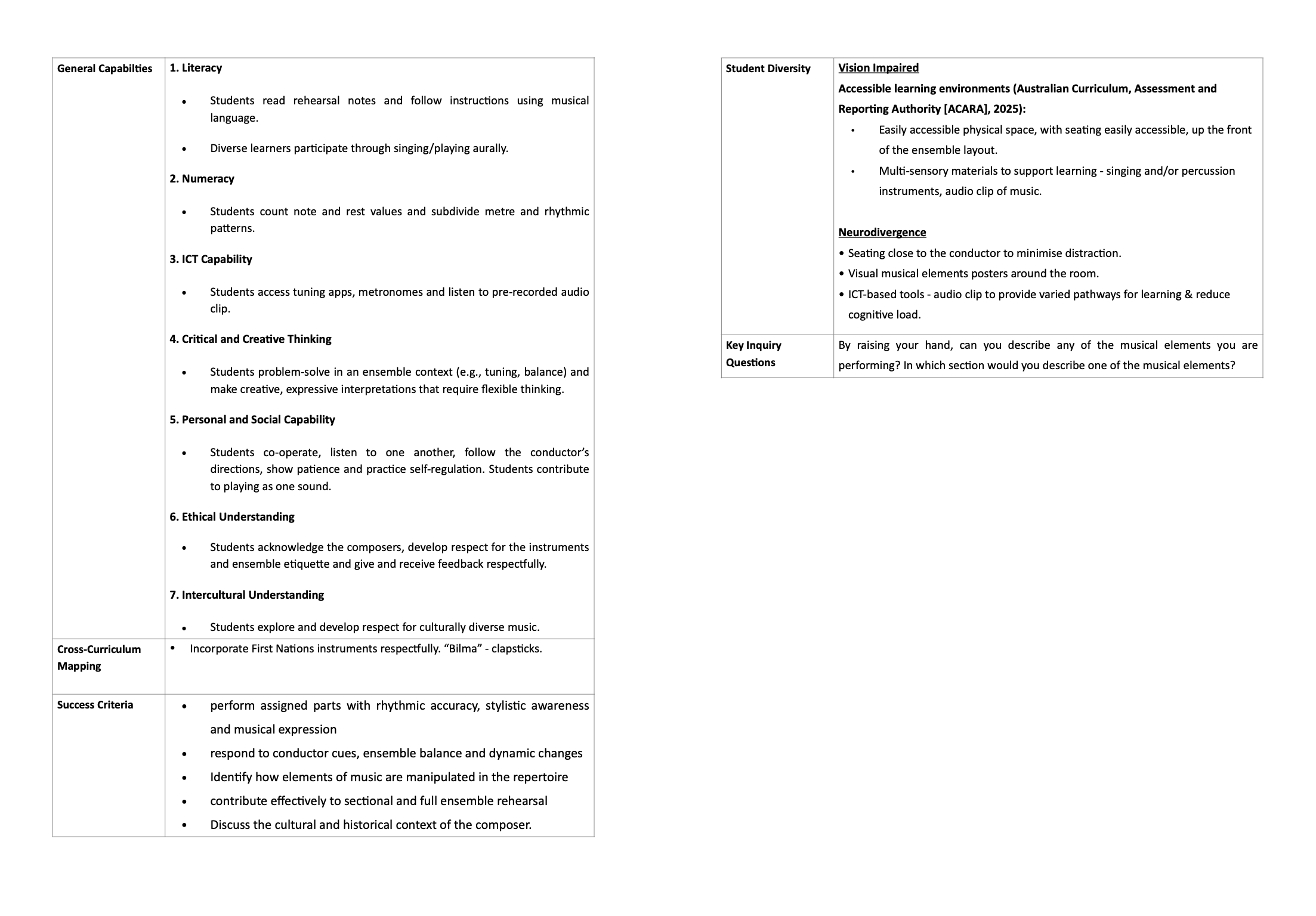
Lesson Plan & Rehearsal Schedule (including differentiation strategies & assessment/reflection notes)
Stage 5 Year 9 students develop ensemble rehearsal and performance skills through collaborative music-making while analysing how the elements of music are manipulated and combined in contemporary popular music across a 5-week rehearsal sequence.
Lesson 3 of 5
Ensemble Rehearsal Sequence – “What Makes You Beautiful”
Included Resources
Lesson sequence and lesson plan
Sheet music and ensemble arrangements
Visual aids posters
Rehearsal recordings
YouTube clips
Digital tuner and metronome apps
Syllabus Outcomes
MU5-PER-01 – performs repertoire with stylistic awareness and musical expression
MU5-LIS-01 – uses listening skills to analyse music in relation to stylistic, cultural, historical and social contexts
MU5-LIS-02 – uses listening skills to evaluate how the elements of music are manipulated and combined
Success Criteria
Students will be able to:
Perform assigned parts with rhythmic accuracy, stylistic awareness and musical expression.
Respond to conductor cues, ensemble balance and dynamic changes.
Identify how elements of music are manipulated in the repertoire.
Contribute effectively to sectional and full ensemble rehearsals.
Discuss the cultural and historical context of the composer.
ICT Integration
Audio rehearsal recordings/backing tracks
Digital tuner and metronome applications
YouTube clips
Assessment Strategies
Teacher observation and formative feedback
Peer/self-reflection
Musical elements discussion
Final ensemble run-through
Lesson Sequence – “What Makes You Beautiful”
Lesson 1: Introduction, musical elements and rehearse the first section.
Lesson 2: Sectionals focusing on rhythm, timing and learning parts.
Lesson 3: Full rehearsal bars 59–end.
Lesson 4: Polish piece; balance, style, accuracy, and create a safe space for peer feedback.
Lesson 5: Final rehearsal and reflective evaluation.
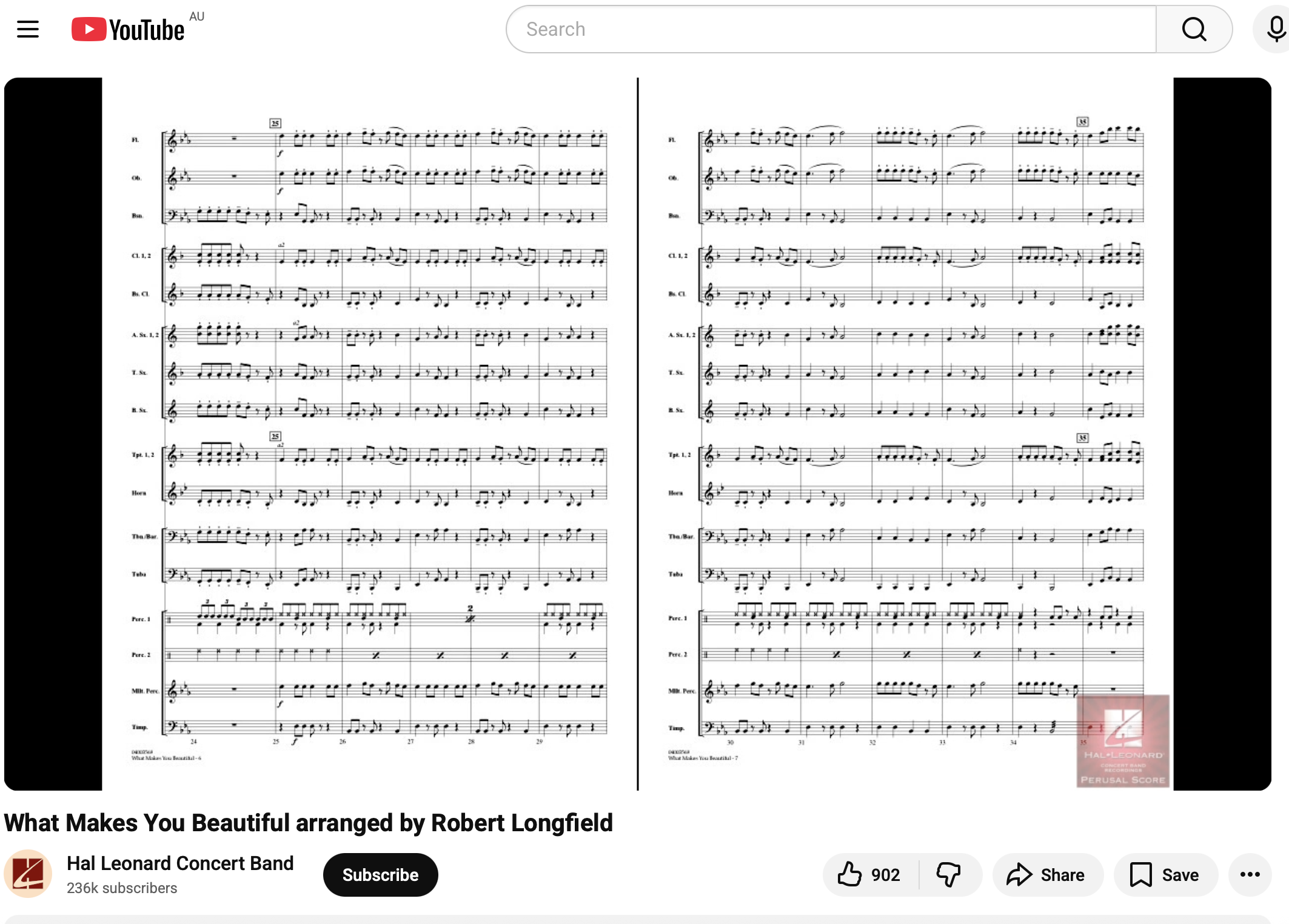
Supporting Resource: Recording
Commentary
This artefact demonstrates APST-3 through the implementation of a sequenced Stage 5 ensemble rehearsal program of “What Makes You Beautiful”. The detailed Lesson 3 plan demonstrates sequencing of learning by assessing what students already know, building on prior rehearsal experiences, and extending students’ understanding of texture, dynamics, ensemble balance, stylistic awareness and performance ability. Explicit learning intentions, rehearsal goals, bar numbers, and success criteria support student understanding and engagement throughout the lesson.
The incorporation of visual aids, audio recordings, peer modelling, flexible participation opportunities and seating adjustments supports diverse learners by reducing cognitive load. Collaborative rehearsal structures, sectionals, and peer support opportunities encourage active participation, cooperative learning and extension opportunities for gifted students.
ICT integrations include the use of audio clips from rehearsal recordings, recorded tracks on YouTube, and tuner and metronome apps, which support musical analysis, ensemble performance, and independent practice. Formative and summative assessments are employed through teacher observation, conductor feedback, peer/self-reflection, rehearsal discussions, and ensemble performance activities. This monitors student progress and informs future teaching and learning.