APST - 2: Know the Content and How to Teach it
Year 7 Stage 4 Music: Introduction to Digital Composition and Musical Concepts
NESA Music 7–10 Syllabus (2024) Outcomes: MU4-PER-01, MU4-LIS-01 & MU4-COM-01
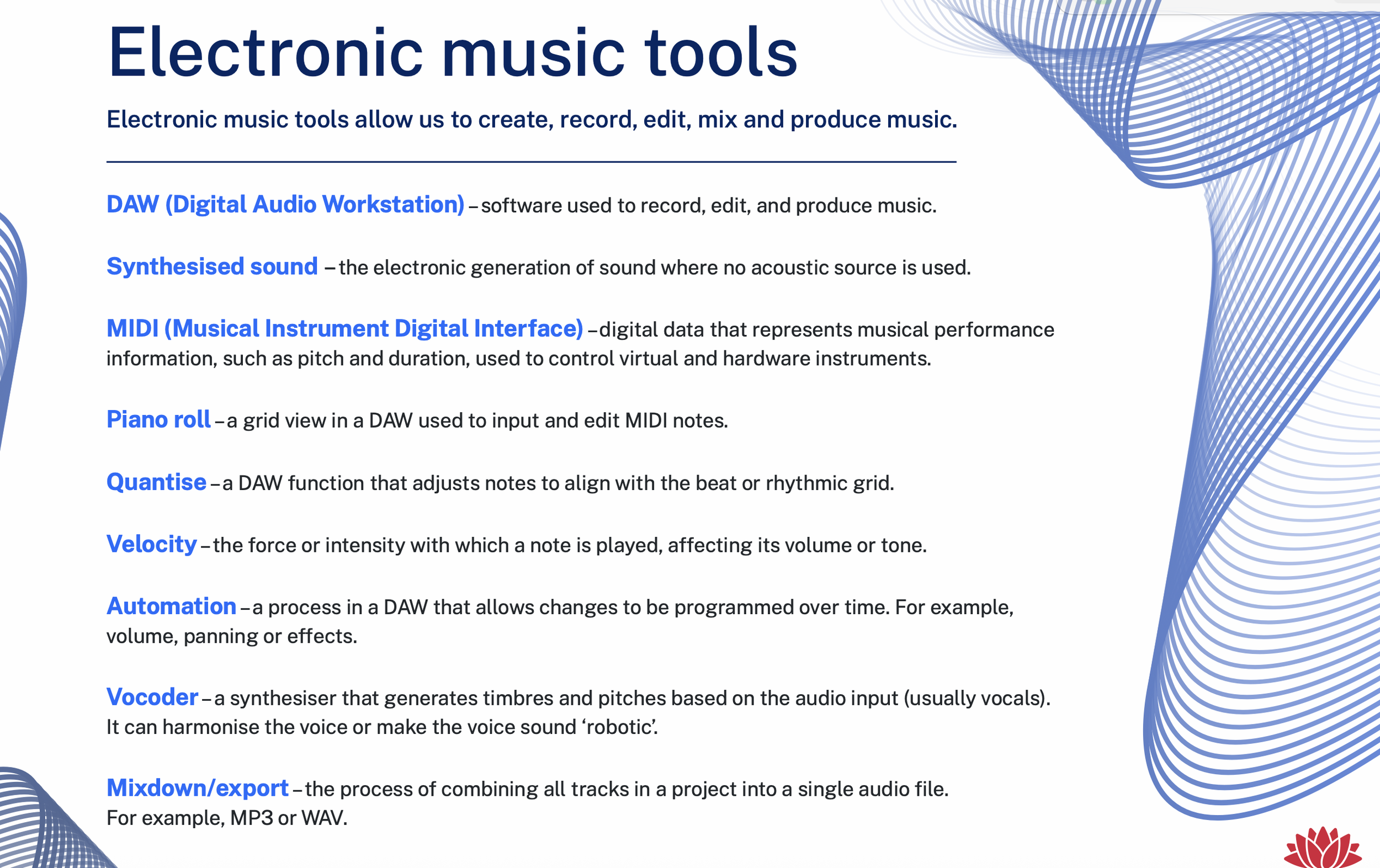
DAW Composition Activity Poster
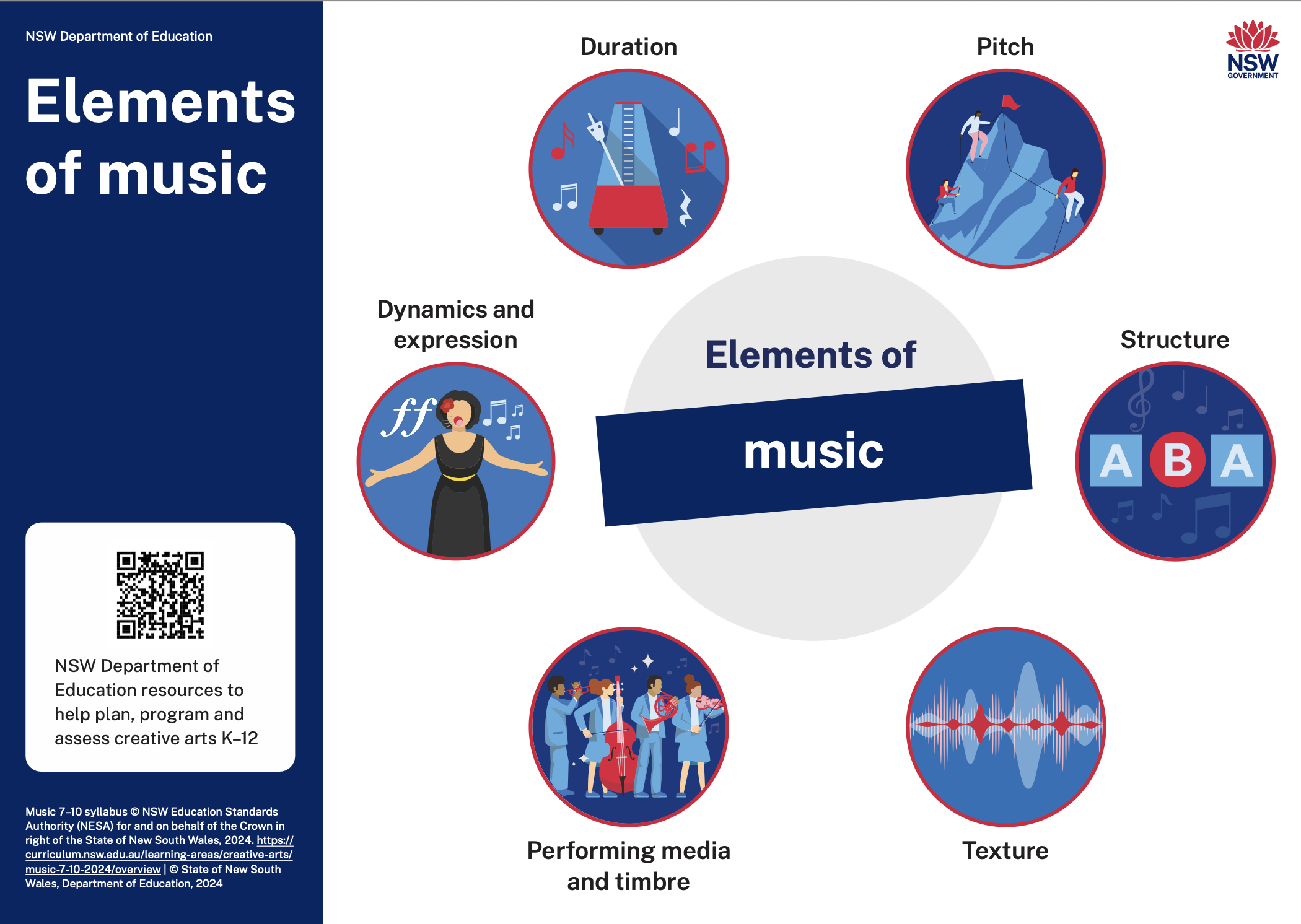
Musical Elements Visual Posters/Resources
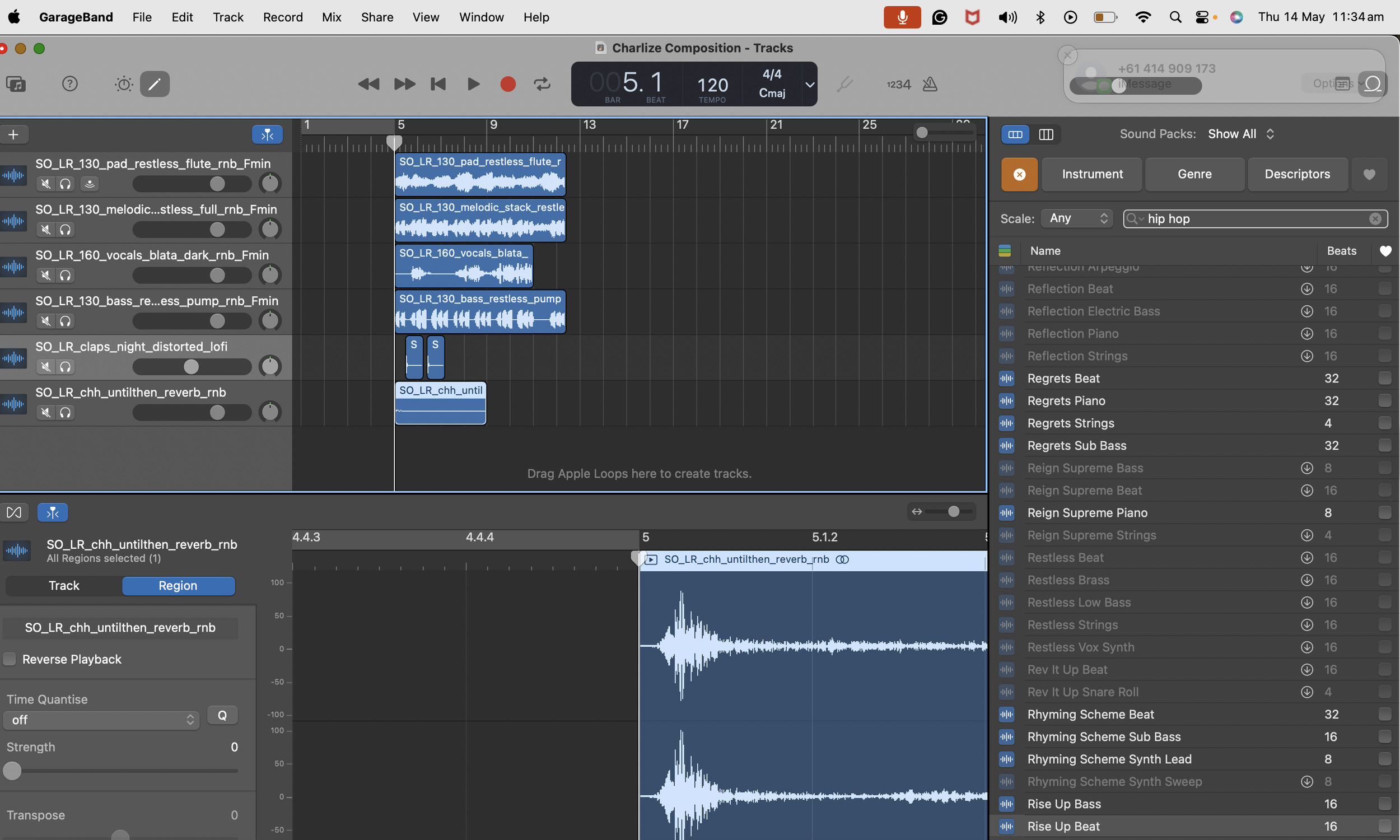
Stage 4 Music – DAW Composition Task
Activity Prompt
Using GarageBand, create a short 16-32 bar composition demonstrating at least three musical concepts, including (MU4-COM-01):
texture
duration
dynamics
tone colour
Students should:
layer loops and instruments
experiment with rhythmic and melodic ideas
demonstrate contrast through dynamics or texture
export and share their composition for class discussion and reflection (MU4-LIS-01 & MU4-PER-01)
Commentary
This artefact demonstrates the explicit teaching of musical concepts through an ICT-supported composition task within a Stage 4 Year 7 General Music classroom. Using GarageBand as a Digital Audio Workstation (DAW), students demonstrate understanding of musical concepts such as texture, duration, dynamics, and pitch. Musical elements, posters and teacher modelling are used to scaffold learning and support the connection between theory and practice.
In accordance with the NESA Music 7–10 Syllabus (2024), this task addresses outcome MU4-COM-01, as students improvise, arrange, or compose using the elements of music through digital composition. The artefact supports MU4-LIS-01 by listening, analysing, and considering the use of musical elements. MU4-PER-01 is demonstrated as students share their understanding of the elements of music through compositions during class discussion and reflection.
The use of visual supports and explicit instruction helps students develop musical literacy and conceptual understanding in a structured, motivating learning environment. Cross-curriculum capabilities of literacy, numeracy, digital literacy, creative thinking and personal and social capability are developed. GarageBand supports multimodal learning by combining visual, auditory and kinaesthetic approaches to music education. Students experiment with layering loops, manipulating dynamics, and creating contrasting textures, receiving immediate auditory feedback in the DAW. This supports student creativity, independent exploration, and active engagement with musical concepts in a contemporary, accessible format.
In this artefact, APST-2 is demonstrated through the use of ICT resources to support differentiation and enable students to interact with composition at varying levels of experience and ability. Ethical aspects include ensuring equitable access to digital technologies, responsible use of copyrighted loops and audio materials, and promoting safe and respectful use of ICT in the classroom.