APST-4: Create and Maintain Supportive and Safe Learning Environments
Stage 5 Music: Ensemble Rehearsal Expectaions and Procedures
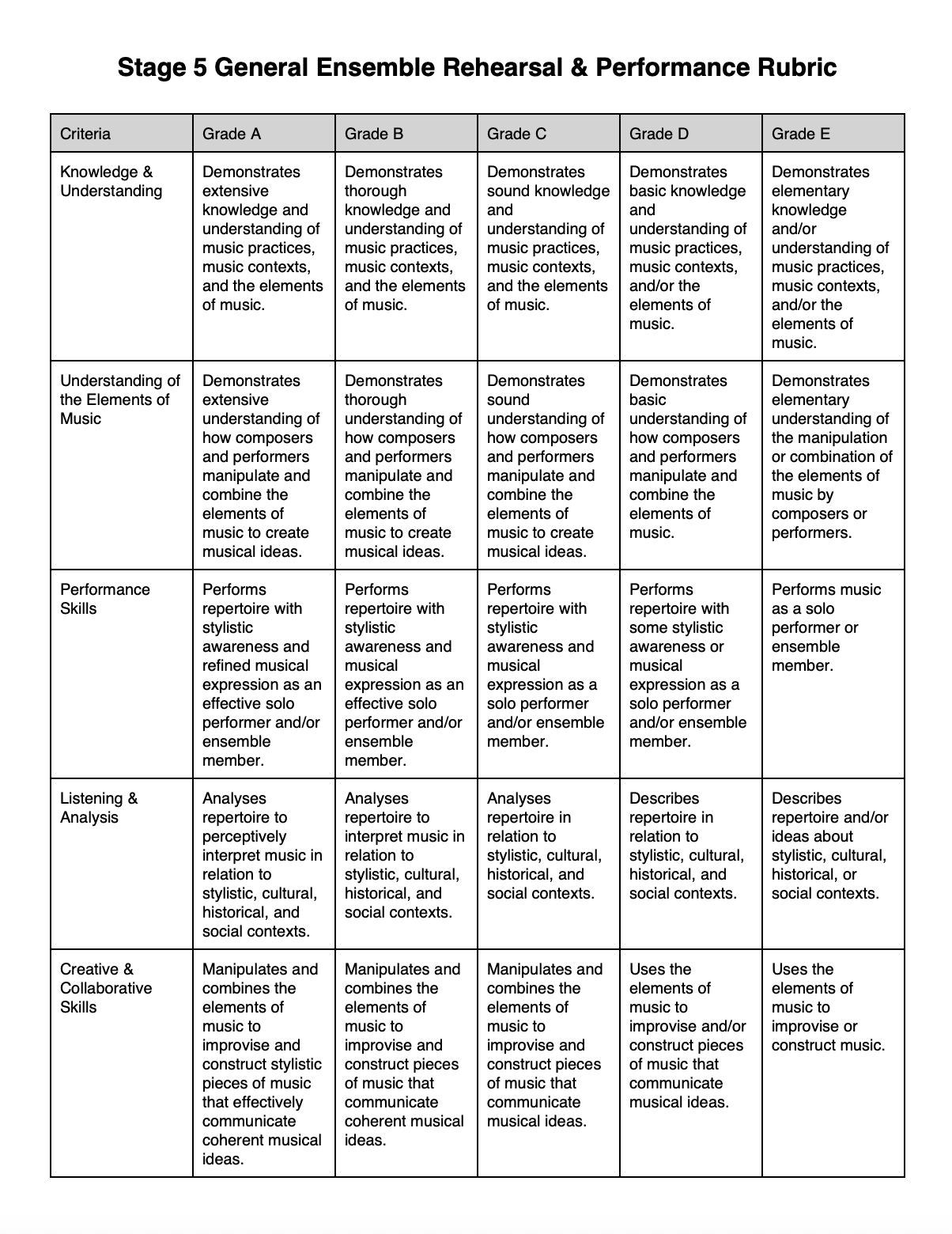
Rubric
Course Descriptor
Commentary
APST-4 is demonstrated through this artefact, which includes a rubric built on the NESA 7–10 Music Syllabus (2024) and a link to the NESA Course Performance Descriptor, supporting the creation of a safe, inclusive, and collaborative learning environment.
Rubrics, course descriptors, and other simply, yet informatively written conduct and expectation documents support successful rehearsal participation, ensemble collaboration, performance, listening, and respectful engagement during music-making activities. Rehearsal plans, collaborative responsibilities, and success criteria help students engage confidently in both sectional and full-ensemble rehearsals.
Providing students with a course descriptor and rubric fosters clear expectations and markers for success as well as positive behaviour and respectful interaction with peers. Rehearsal practices of active listening, constructive participation and reflective discussion encourage students to contribute safely and respectfully.
Well-being and safety are further supported through clear rehearsal structures, organised transitions, safe instrument use, and responsible equipment use. Inclusive participation is encouraged by providing students with opportunities to develop a range of skills and abilities.
Formative assessment, as ongoing teacher observation, peer/self-assessment and feedback during rehearsal activities, supports reflective learning, student self-regulation and the development of positive behaviours while informing future teaching and learning.